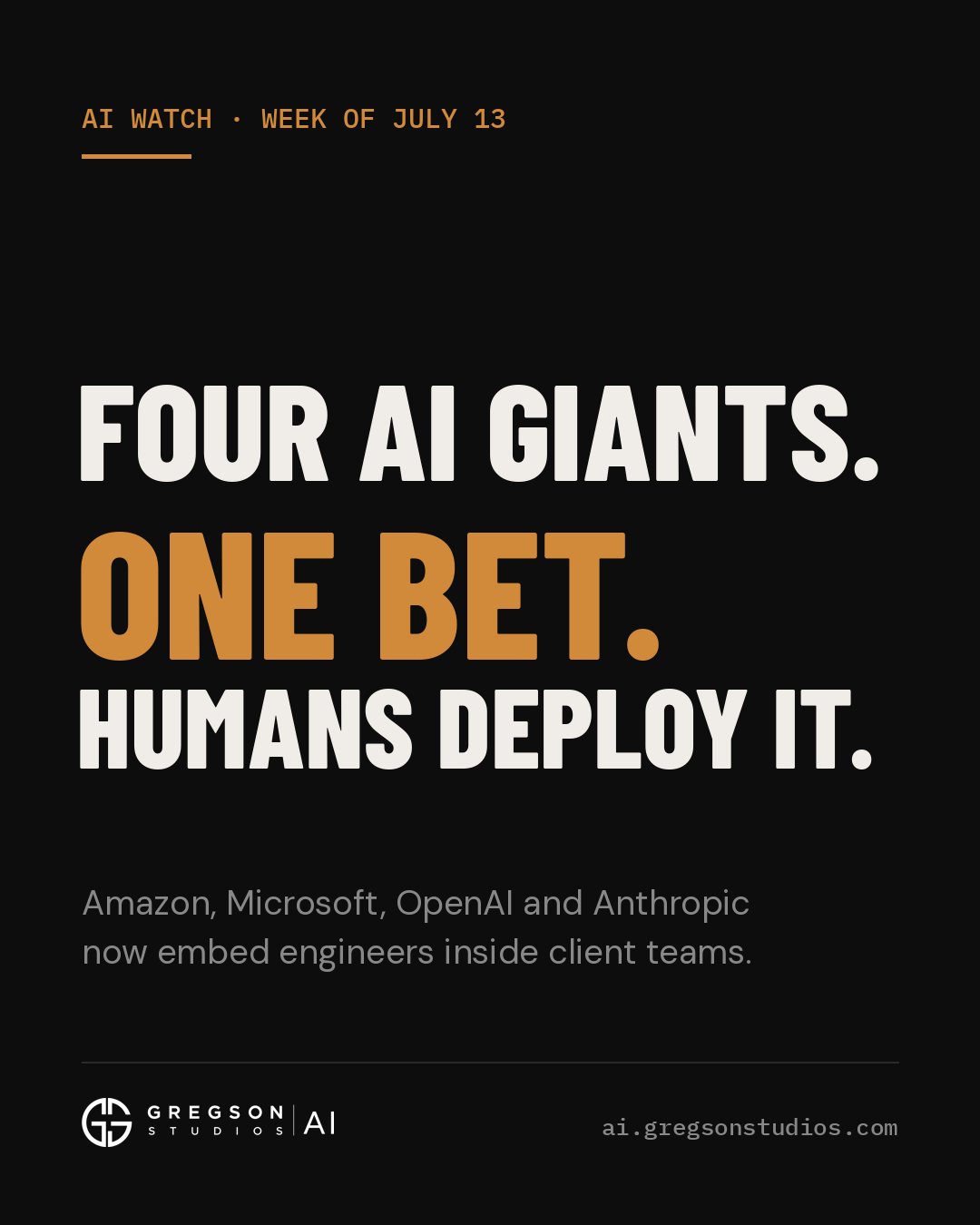
If you make video for your business, this was a week that could make you feel behind. Five significant launches landed in seven days, from a 30-second video model to a new developer platform to fresh entries from Meta and xAI. The honest news is that none of it changes what you should do on Monday. The tools got faster and longer, but the job of deciding what is worth your time got harder, not easier. Here is what happened, why it matters, and what to do about each one.
Seedance 2.5 reached its public launch window
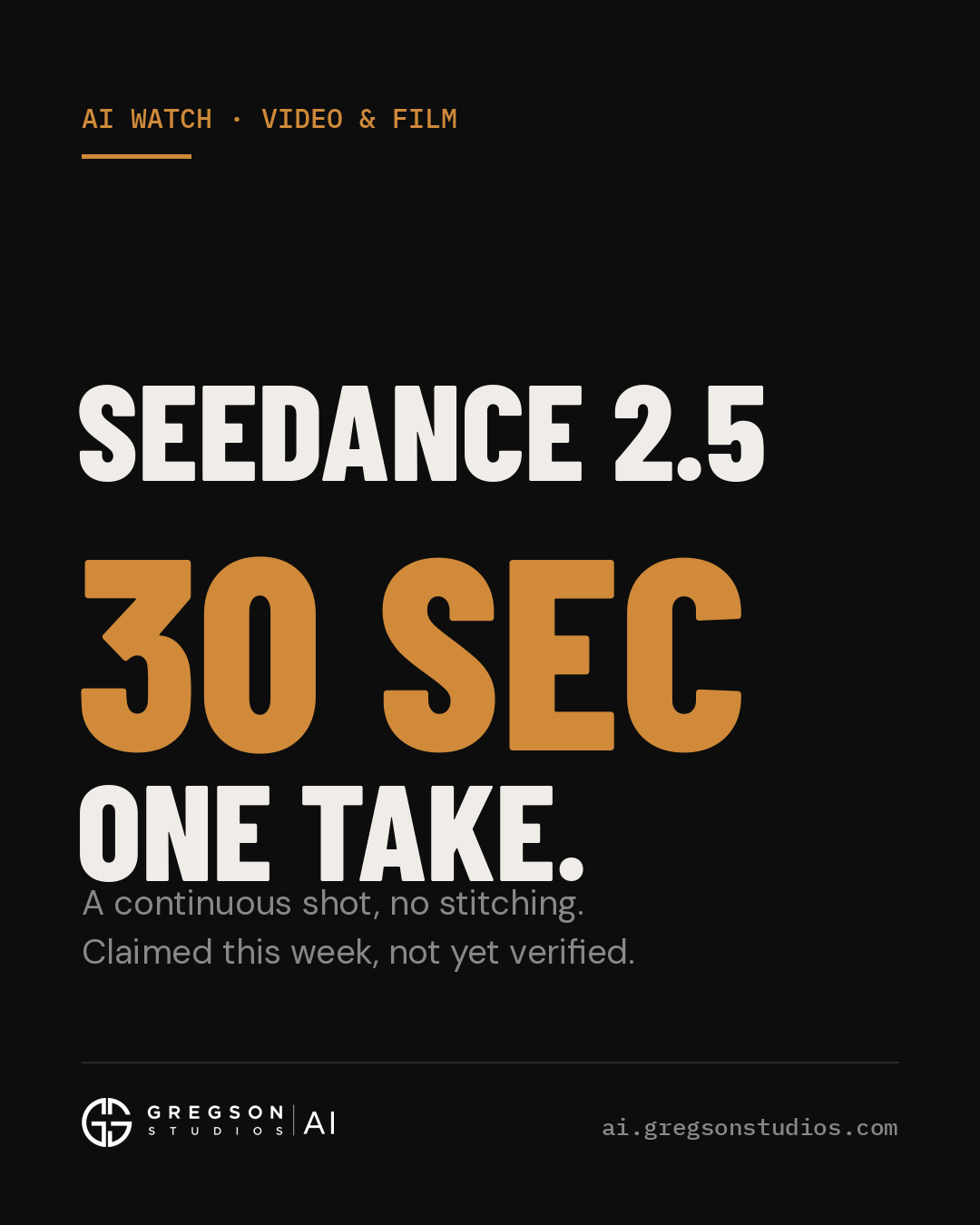
ByteDance opened the public launch window for Seedance 2.5 on July 3. The headline claim is a continuous 30-second clip generated in a single pass, with no stitching and no scene-cut splicing, plus support for up to 50 reference images and native audio. It reaches ByteDance’s own Dreamina and Jimeng platforms first, with CapCut integration targeted for mid-July and API access later in the month.
Why you should care: the hard cut every few seconds has been one of the clearest signs that a clip was made by AI. A real 30-second single take, if it holds up, removes that tell. The caution is equally real. The claims are not yet independently verified, and the model carries open copyright questions.
What to do about it: do not rebuild anything yet. Note that this will arrive inside CapCut, a tool you or your team may already use, and plan to test it there on one small, low-risk clip before it touches client work.
Runway launched Runway Dev, a developer platform
On July 8, Runway launched Runway Dev, a single API that lets developers integrate image, video, audio, and real-time character models, with custom workflows and controls for security and reliability.
Why you should care: the interesting shift here is not a new model, it is the plumbing. The advantage is moving from owning one great tool to being able to wire several of them into your own product or process.
What to do about it: if you have ever wanted video generation inside your own app, site, or internal workflow, the building blocks just got easier to assemble. This is a scoping conversation, not a big build, and it is worth having before you assume it is out of reach.
Meta released Muse Image and confirmed Muse Video
Meta released Muse Image, the first image model from its Superintelligence Labs group, and confirmed that a video model, Muse Video, is planned for later. Both are aimed at pulling creators and advertisers onto Meta’s platforms.
Why you should care: when generation lives inside the feed where audiences already scroll, the way ads and creative get made for those feeds changes. Convenience pulls people toward the built-in option.
What to do about it: if Facebook and Instagram are where your customers are, expect generate-in-the-feed tools to show up in your ad workflow. Decide on purpose which ones fit your brand rather than using them because they are simply there.
xAI added video generation to Grok 4.5
On July 8, xAI announced Grok 4.5, a model built for coding, agentic tasks, and knowledge work, and highlighted video generation across quality, cost, and latency as part of the release.
Why you should care: a general assistant that also makes video means more people will create video without ever opening a dedicated tool. The tool count keeps climbing.
What to do about it: resist adding it just because it is there. Ask what it would replace in your current setup. If the answer is nothing, skip it and keep the two or three tools that already earn their place.
Google’s Gemini Omni Flash reached the Runway API
On July 1, Gemini Omni Flash became available through the Runway API. It generates video from text, a first-frame image, or an existing clip, outputs at 720p with optional audio, and is built for conversational, back-and-forth editing rather than one-shot prompts.
Why you should care: editing video by describing the change you want, in plain language, lowers the skill barrier for quick revisions. That is genuinely useful for drafts.
What to do about it: use it for what its resolution tells you it is for. 720p means fast drafts and social, not a finished piece. Keep your real edit and your finishing tools separate from your draft tools.
Runway added Agent Skills for campaigns
Also this week, Runway released Agent Skills on July 2, which lets users build ad campaigns, create commercials, and localize ads from a single command instead of assembling each asset by hand.
Why you should care: this points the tools at marketing output, not just single clips. One prompt producing a first-draft campaign can save a small team real hours.
What to do about it: treat the output as a first draft, not a finished campaign. The command is the easy part. Someone still has to direct it, and that direction is what decides whether the result is any good.
And the story under the stories: Hollywood’s split
As Seedance 2.5 launched, reporting described a widening split in film. There are public statements and legal pressure against AI video tools, alongside quiet use of the same tools inside real production, often for previs, concept work, and gap shots. This is the most honest picture of where the market sits, and it is more nuanced than the headlines on either side.
The Gregson Studios AI perspective
I spent 30 years directing and producing film and television. I have watched a lot of new gear arrive with the promise that it would change everything. Here is what I learned on real sets: the camera never made the film good. The choices did. The framing, the timing, the cut, the taste behind all of it. That is the part that never got automated, and it still has not.
This week is a good example. Five launches, each real, each faster than the last, and not one of them answers the question that actually pays off for your business: where does this fit in your actual work, and where does it just eat your afternoon. The teams that win with these tools are the ones who decide what good looks like first, then let the tool do the fast part. The teams that lose are the ones who chase every launch and never ship.
Our position on the creative side is simple and it does not change with the news cycle. These tools are for workflow, marketing, and operations. They are not for replacing the artists who make the work worth watching.
Your practical next step
Pick one task you do every week that involves video, and ask whether one of this week’s tools would genuinely shorten it without lowering the quality your name is on. If yes, test it once, small. If no, move on with a clear conscience. If you want help sorting the two or three tools worth your time from the noise, that is exactly the work we do. Start at https://ai.gregsonstudios.com or see the roundup and links at https://ai.gregsonstudios.com/links.html.
FAQ
Is the Seedance 2.5 30-second claim proven?
Not yet. As of its July 3 public launch window, the continuous 30-second single-pass claim was not independently verified, and the model carried open copyright questions. Treat it as promising and unproven.
Do I need to switch video tools because of these launches?
No. Most of these updates reach tools you already use, like CapCut, or serve narrow jobs like fast drafts. Add a tool only when it clearly replaces a slower step you already have.
Where do AI video tools actually fit for a small business?
Drafts, social clips, b-roll, previs, and concept work are the safe, useful places today. Finished, client-facing work still benefits from a real edit and human judgment.
Sources
ByteDance Seedance 2.5 public launch, published 2026-07-03
Runway Dev developer platform, published 2026-07-08
Meta Muse Image, published 2026-07-07
xAI Grok 4.5, published 2026-07-08
Gemini Omni Flash on the Runway API, published 2026-07-01
Runway Agent Skills, published 2026-07-02
Hollywood public resistance and private use of Seedance, published 2026-07-07